
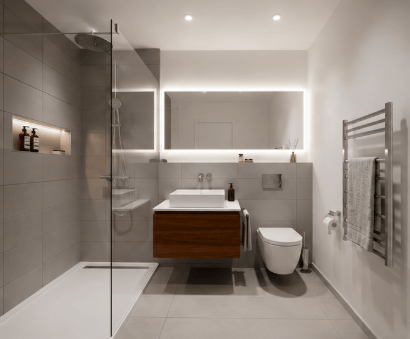
Three quotes are sitting on your kitchen table. £6,500. £9,000. £12,000. Same bathroom. Same brief. Wildly different prices.
Which one’s honest?
If you’re staring at that spread and feeling a bit sick, you’re not alone. Every homeowner we speak to describes the same moment. And the instinct is almost always to reach for the cheapest — until you realise the cheapest quote isn’t leaving out mistakes. It’s leaving out work.
Comparing bathroom quotes properly isn’t about who’s cheapest. It’s about answering one question: am I actually comparing the same job?
Here’s how to work that out — without needing to be a builder yourself.
Ignore the total. Look at the scope.
The total price tells you almost nothing on its own. What matters is what’s inside it.
Take those three quotes above. On the surface, £6,500 looks like the obvious win. Then you read the fine print: the cheapest quote doesn’t include waste removal, electrical work, or waterproofing behind the shower. The £12,000 quote includes all three. Suddenly the gap isn’t £5,500. It’s much smaller — and the cheapest option is going to cost you a lot more once you add back the missing bits.
Before you compare price, make sure every fitter is quoting for the same scope. That means checking five things.
Removal. Does the price include ripping out the old toilet, basin, bath, shower and tiles? Old flooring? Skip hire and waste removal? These add up fast if they’re missing.
Preparation. Plastering. Floor prep. Repairs to damaged walls. Waterproofing (also called tanking) around the shower and bath. This is the invisible stuff that determines whether your beautiful new bathroom is still beautiful in three years — or leaking into the flat below.
Plumbing. Does the quote assume you’re keeping pipework where it is, or moving it? If you’re shifting the toilet or basin, that’s more work than reconnecting existing plumbing. Make sure it’s costed in.
Electrical. Lighting, extractor fans, heated towel rails, shaver sockets — all electrical work. Ask what certification you’ll get when it’s done. If nobody can answer that, walk away.
Finishing. Tiling, grouting, silicone, painting, final clean. It’s the difference between “job done” and “job finished.”
The more detailed the quote, the easier the comparison. If a fitter can’t give you line-by-line pricing, that’s a signal — not necessarily a bad one, but one you should ask about.
Ask what isn’t included
This is the single most useful question you can ask a bathroom fitter:
“What isn’t in your quote?”
Most homeowners focus on what they’re getting. The nasty surprises almost always come from what they assumed was included and wasn’t. A quote might include fitting your new suite but not removing the old one. Tiling but not wall prep. Plumbing but not replacing old pipework that turns out to be knackered.
A good fitter will tell you honestly what could push the price up. A cagey one will change the subject.
The trap of “product allowances”
Watch out for the word “allowance.”
You might see something like: “£1,500 for bathroom products.” Sounds fine — until you pick out your suite and it costs £2,500. Now you’re paying an extra £1,000 that wasn’t in the quote.
There’s nothing wrong with allowances. The problem is not realising one exists. Ask:
- Are the products fixed-price items or allowances?
- What brands and models are included?
- If tiles have a £500 allowance, how many square metres does that actually buy?
“Bathroom suite” on its own means nothing. You want the make, the model, and the number.
What’s actually happening behind the walls
Here’s the part that keeps people up at night: you can’t see what’s underneath.
The tiles get grouted. The floor goes down. Everything looks perfect. But behind that surface is a network of pipes, joints, wiring, and — in older Hackney houses especially — potentially decades of hidden damp, timber decay, or dodgy previous workmanship.
This is where quotes really diverge. Some fitters price for the visible job. Others price with a proper look behind the walls first, so there are no shocks halfway through.
Ask every fitter:
- Are you replacing old pipework or reusing it?
- Are you tanking the wet areas properly?
- Will you photograph anything important before it’s covered up?
- Have you inspected for hidden damp or structural issues before quoting?
That last one matters more than most people realise. A pre-start inspection — sometimes called a Behind the Wall inspection — is one of the best ways to avoid the classic renovation horror story where the budget doubles two weeks in because “we found something.” It’s not always offered, but it’s worth asking about.
Understand how surprises get handled
Even with the best planning, bathrooms in older homes throw up surprises. Rotten joists under the bath. Pipes in worse shape than expected. Walls that won’t hold tile. That’s not the fitter’s fault — it’s the reality of renovating a Victorian or Edwardian property.
What matters is what happens next.
Ask each fitter how they deal with variations — the industry word for extra work that comes up mid-job. Ideally, additional work should be explained before it’s carried out, so you can see:
- What they’ve found
- Why the work is necessary
- How much it’ll add
That way you’re approving the extra cost, not discovering it on the invoice. If a fitter can’t clearly describe their variation process, that’s a red flag. One customer described the classic bad experience like this: “You’re given one price and then suddenly there’s three more thousand added on.” That’s what a broken variation process looks like.
Who’s actually doing the work?
The person quoting isn’t always the person swinging the hammer.
That’s not automatically a problem — most bathroom projects involve a plumber, electrician, tiler, and sometimes a plasterer and decorator too. But you should know:
- Who’s doing which part?
- Are they employed, or subcontracted?
- Who’s coordinating them all?
Having several trades on a job is normal. Having nobody clearly responsible for the finished result isn’t. Ask specifically who owns the outcome.
This is also where the difference between a random online marketplace and a referral-only network shows up. Marketplaces are essentially “anyone with a van.” The best fitters in Hackney tend to be the ones bathroom showrooms and designers quietly recommend to their private clients — because they’ve been vetted through years of relationship, not a five-minute online sign-up.
What happens after the job’s done?
Ask about the end of the project, not just the start.
- What’s the process if you spot a snag two weeks after the job’s finished?
- Is there a warranty on the workmanship?
- Does the final payment move before or after you’ve done a full walkthrough?
The best answer here is one where the fitter has a clear post-completion process — not “call us and we’ll try to help.” Some now use snagging escrow, where the final payment sits with a third party until you’ve signed off on everything. It removes the awkward conversation about outstanding fixes and gives you real leverage. Not every fitter offers this, but if one does, it tells you something about how they think about their work.
Ten questions to ask before signing
If you take nothing else from this, take these:
- Exactly what work is included in the price?
- What’s specifically excluded?
- Who’s supplying the bathroom products — you or me?
- What allowances have you assumed for products and materials?
- Is waterproofing (tanking) included around wet areas?
- How will you handle surprises or extra work if they come up?
- Who’s actually doing the work — and who’s coordinating them?
- How long should the job take, start to finish?
- What insurance and certification will I get?
- What happens if something goes wrong after you’ve finished?
The answers tell you as much as the price does.
Red flags
Some quotes should give you pause. A vague quote with no breakdown. Large sections marked “TBC.” A fitter who can’t explain how they’d handle unexpected work. Pressure to sign on the spot.
And be extra careful with quotes that are dramatically cheaper than everyone else’s — not because low prices are automatically bad, but because you need to understand why they’re lower. If a fitter can explain it (bulk supplier relationships, no showroom overhead), fine. If they can’t, there’s usually a reason.
The best quote is the one you understand
Choosing a bathroom fitter isn’t just buying labour and materials. It’s buying certainty — the peace of mind of knowing what’s happening in your home, what you’re paying for, and what happens if something goes wrong.
The cheapest quote almost never delivers that.
The best quote isn’t the lowest number. It’s the one where the scope is clear, the costs are itemised, the tradespeople are vetted, and the person selling it can answer every question above without hesitation.
Before you sign anything, ask yourself one thing:
“If I put this quote next to another one, am I actually comparing the same job?”
If the answer’s yes, you’re ready to decide. If it isn’t, keep asking questions.
Ready for a bathroom without the stress?
Hackney Bathroom Fitters exists to make this whole process less anxious. Fixed pricing. A vetted, referral-only trades network. Pre-start Behind the Wall inspections so nothing nasty surprises you halfway through. Snagging escrow so the final payment only moves when you’re happy.


Leave a Reply